
Correspondence and routing
Incoming, outgoing and internal memos in one model, with routing governed by classification.
A letter is drafted, approved, signed, routed and filed in one electronic registry on your institution's servers. Every step is recorded with its actor and its time.
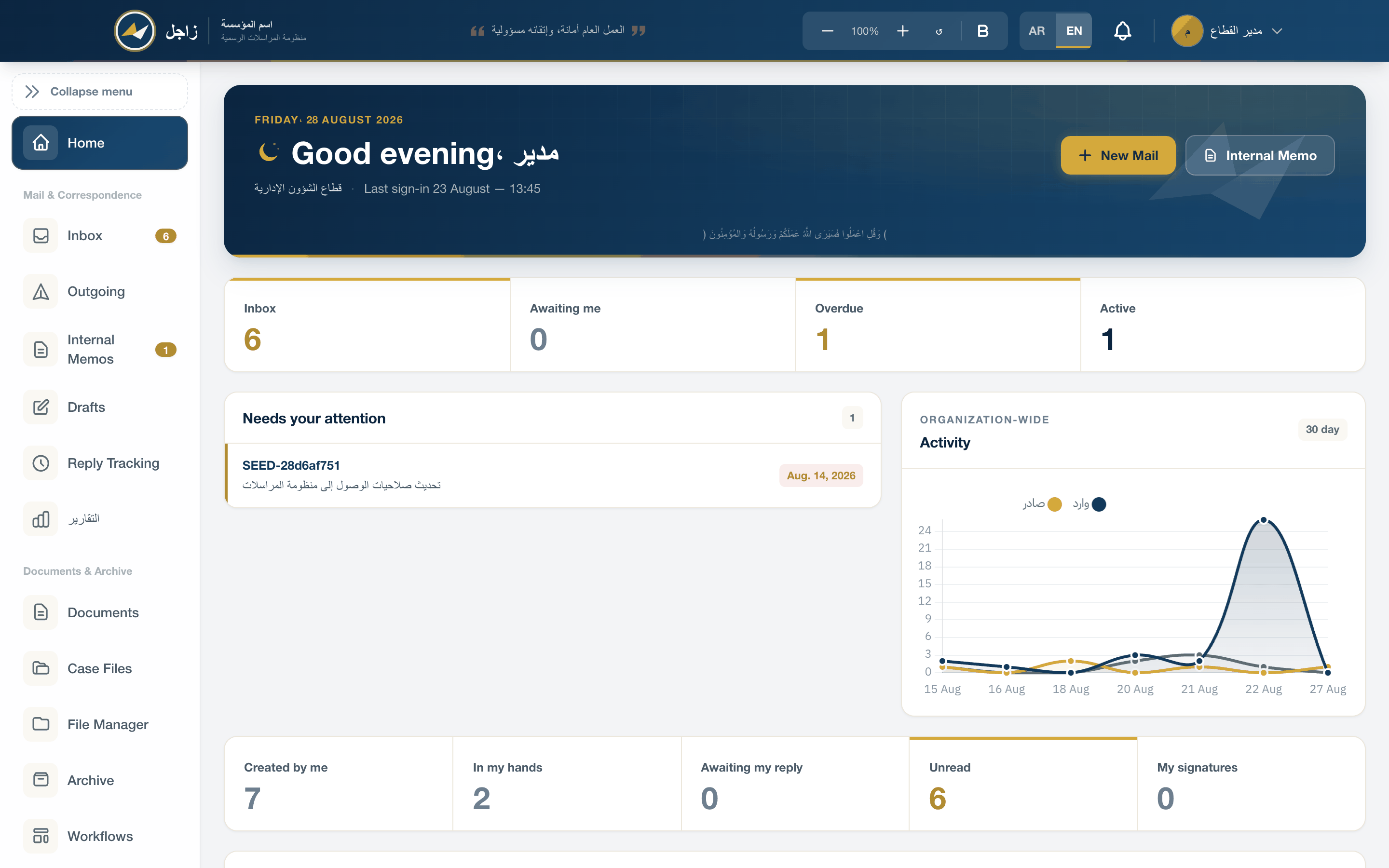
New mail, internal memo
A real screen from the system · with a mobile app
Handling correspondence from drafting through to filing.
Incoming, outgoing and internal memos in one model, with routing governed by classification.
Whoever holds the authority signs when the letter reaches them, with no rigid queue.
A case's letters in one dossier, with a complete chain of provenance.
Indexed filing and search over a letter's register data and its body. And attachment text from the archive.
A4 templates with signature and seal, and a verification code readable from outside the system.
Signed exchange between institutions (G2G), not hand delivery.
Unit and staff activity, cycle time and overdue items.
It picks incoming paper up from the scanner and binds it to the letter.
Current correspondence enters Zajil today, and the old paper is indexed into a digital records system on your own infrastructure.
A scan agent picks paper up from the scanner, and the archive reads its text and indexes it.
No second system for staff to open, and no second account to remember.
An archived document attaches to an open dossier.
The digital archive is a separate system (Paperless-ngx) installed alongside Zajil on your infrastructure. Zajil integrates with it and does not contain it: two installations, not one.
On the live letter and on the digitized archive. It proposes; the decision stays with the member of staff.
The dictate button sits in the toolbar of the letter editor. A member of staff dictates; the engine transcribes, then recasts the wording.
Several versions of a single letter, with the original text kept alongside.
A single letter or a whole dossier, with a tracked analysis state.
It analyses a digitized document decades old as it analyses today's letter.
It checks a contract against legal references you supply yourself. A review aid, not a substitute for legal counsel.
What it changes for the member of staff: the letter is dictated aloud instead of typed; the drafting comes back recast in proper administrative language, in several versions to choose between rather than one imposed; documents and whole case files are summarised and analysed; and the paper archive of past decades is read as readily as today's letter. Each of these is an offer the member of staff takes or discards — the same day's work, finished sooner and with fewer mistakes.
No stage completed outside the system.
With its type and its security classification, and its number under the institution's prefix.
Each holder of authority approves when it reaches them, with no rigid queue.
The signature and seal on the official template, together with a verification code.
To the responsible unit or member of staff, with the deadline on one board.
It leaves signed with a trusted key, with no hand delivery.
It is closed and indexed, then retrieved by search over its data and its body.
An Android and iOS application: read, approve and route. Authoring and the official seal stay on the web.
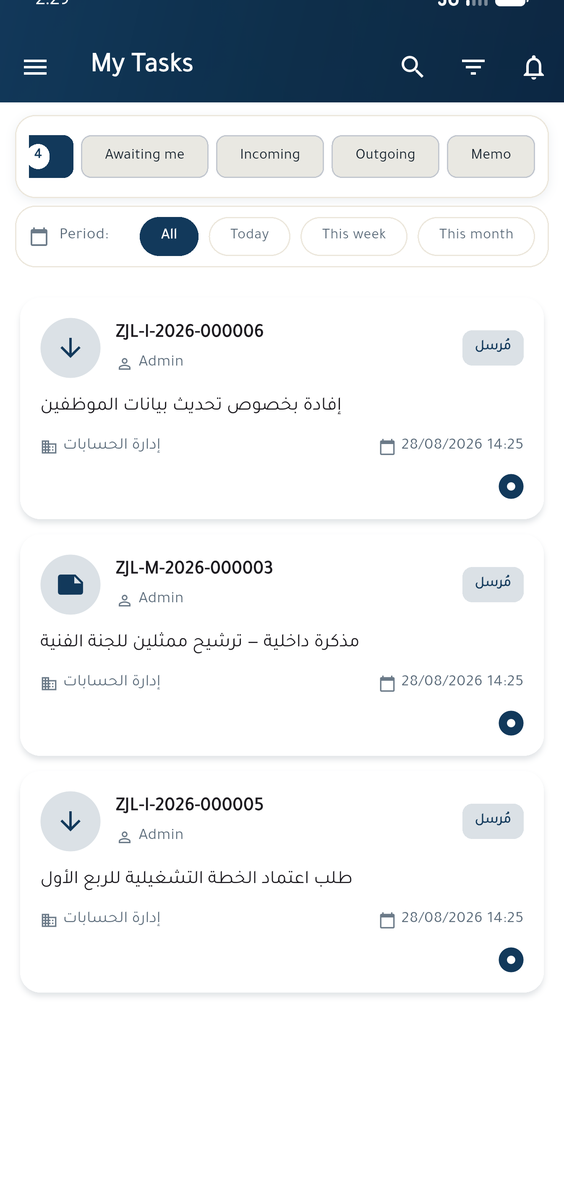
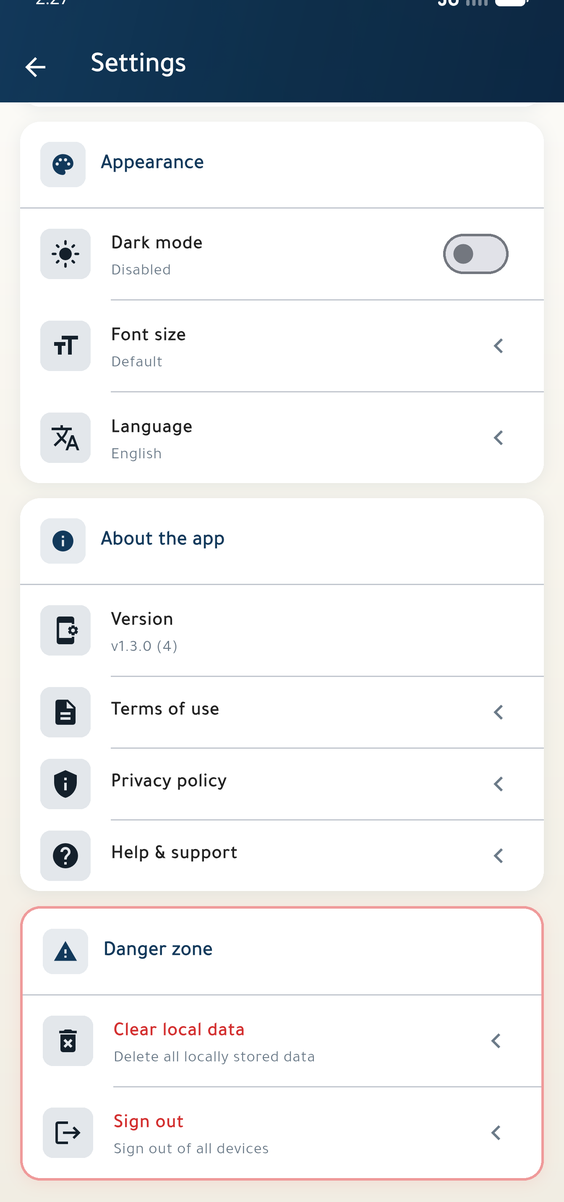
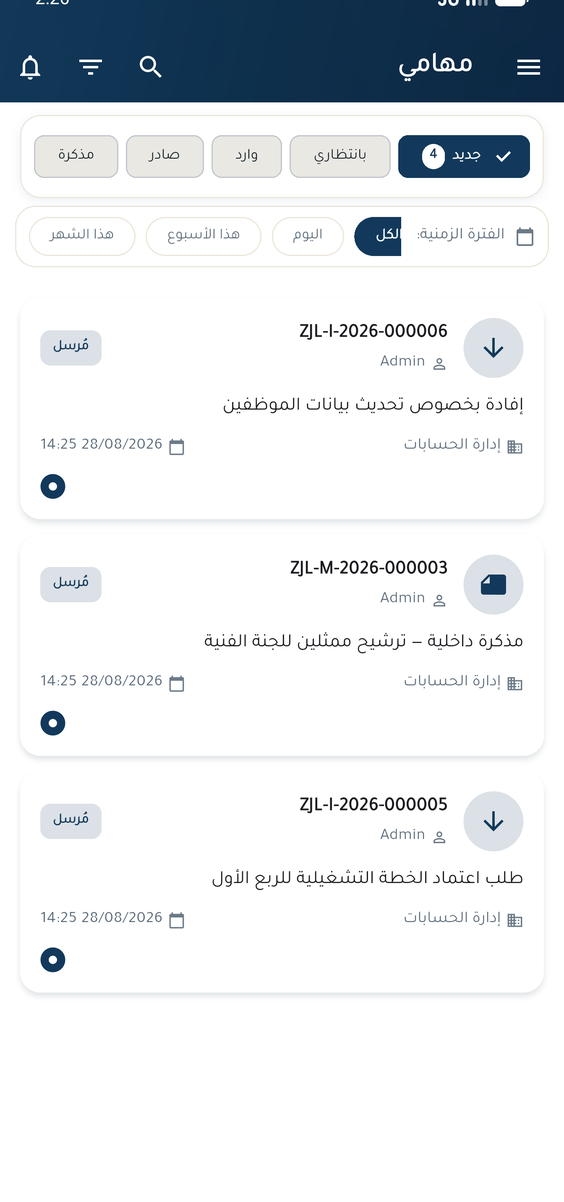
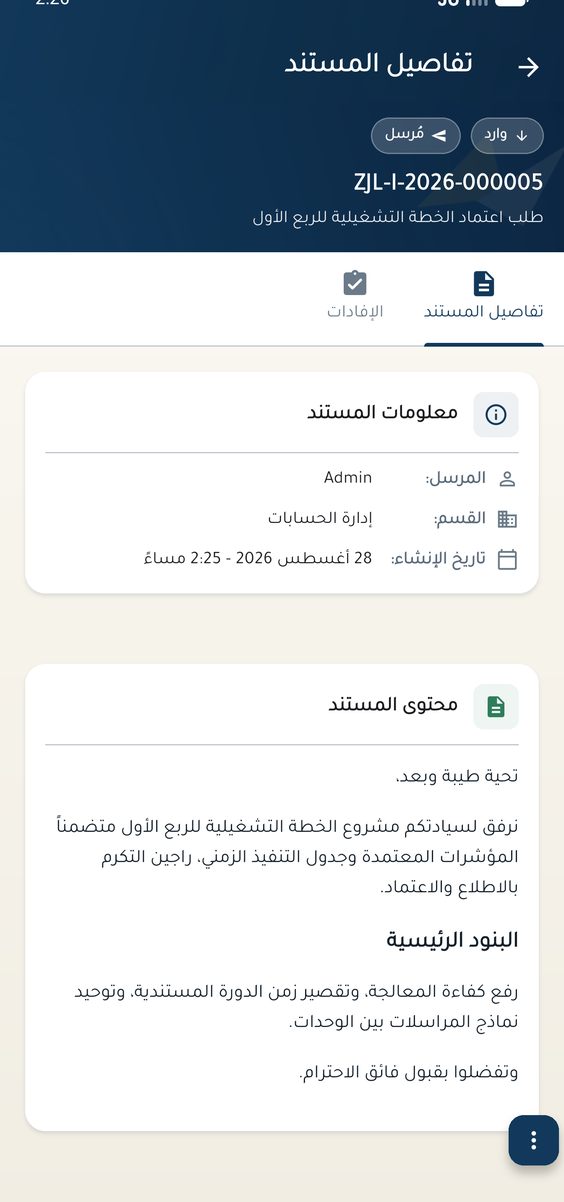
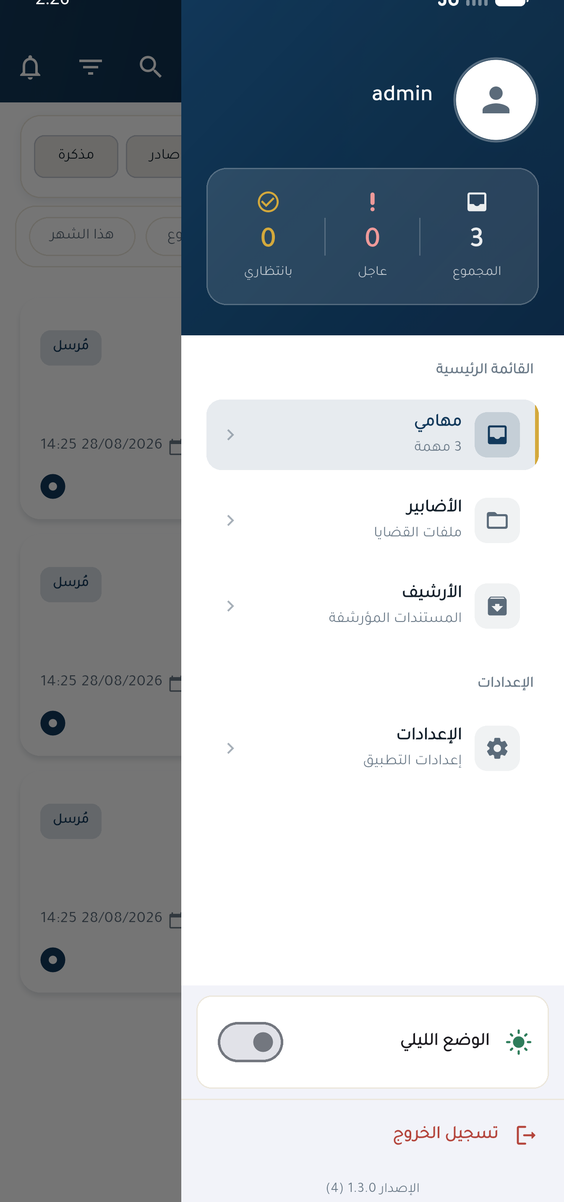
Scroll sideways for the remaining screens
Read, approve, reject and route, under the same permissions and the same classification.
PIN lock, screen-capture blocking on Android, and certificate pinning enabled at build time.
A dark theme that was designed, not inverted.
The application, the database and the attachments sit on your institution's own infrastructure alone.
Fonts, libraries and interface assets are all part of the installation itself.
Name, logo, letterhead and numbering prefix from the screen, with no programming.
Who created it, who approved it, who routed it and when — in a record no edit reaches.
Ready-made accounts, and data reset every 24 hours.
Open the live demoWe take on the deployment and the initial setup: your institution's identity, its structure and its roles.
Tell us the name of the institution and the scale of use.